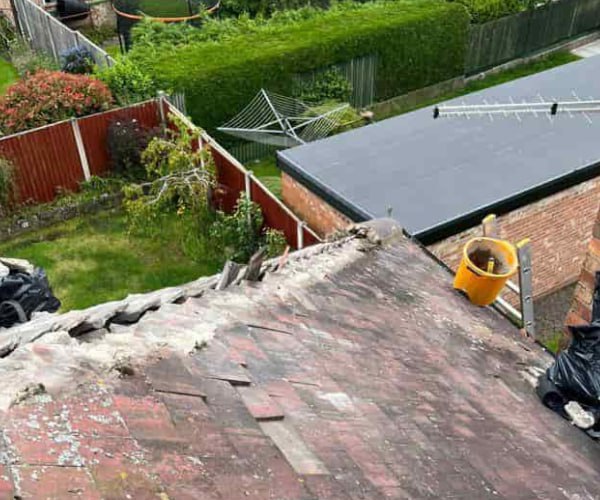
Which Roofing Problems Need Attention Without Delay?
Some roofing problems develop slowly and can be addressed through planned maintenance, while others require much more prompt attention. A roof is the primary barrier between a property and the weather, so once its ability to keep out wind and rain has been compromised, a relatively localised defect can sometimes develop into a wider problem.
For homeowners in Rossington, South Yorkshire, knowing which warning signs deserve prompt professional attention can help protect otherwise serviceable roofing materials and prevent deterioration from spreading. At WBN Roofing Rossington, we assess roofing problems carefully to determine their cause, extent and the most appropriate repair.
Why Prompt Roof Repairs Matter
Roofing components work together as a complete system. Tiles or slates provide the main covering, while flashing, valleys, ridges, hips, underlay and other details help maintain effective weather protection.
If one component fails, surrounding areas can become exposed to conditions they were not designed to withstand.
Early attention can help:
- Limit continued water ingress
- Prevent loose materials from deteriorating further
- Protect underlying roofing components
- Keep localised defects from spreading
- Identify hidden deterioration
- Preserve sound sections of the existing roof
The important point is to respond to the cause rather than simply waiting until the symptoms become severe.
1. Active Roof Leaks
Water entering the property is one of the clearest signs that roofing attention is required.
Leaks may appear as obvious dripping, but they can also produce less dramatic symptoms such as:
- Damp ceiling patches
- Water staining
- Moisture in the loft
- Damp roof timbers
- Marks that become darker following rainfall
Even a small leak deserves investigation. The amount of visible water indoors does not necessarily reflect the extent of the external defect.
2. Missing or Displaced Roof Tiles
A missing tile creates an obvious weakness in the roof covering, but tiles do not need to disappear completely before causing problems.
A slipped or displaced tile can expose the underlay and surrounding components to increased weather exposure.
Strong winds can also cause already loose tiles to move further. If neighbouring tiles have been affected, what initially appears to be one isolated defect could involve a larger section.
Prompt assessment can determine whether the problem is limited to individual tiles or whether there is an underlying reason for repeated movement.
3. Broken or Severely Cracked Tiles
Small surface marks and significant tile damage are not necessarily the same thing. However, where a tile has cracked through, broken apart or lost a substantial section, its ability to perform correctly may be compromised.
Damaged tiles should be considered alongside the condition of the surrounding roof.
If numerous tiles are cracking or deteriorating, this can indicate a broader issue rather than several unrelated defects.
4. Loose Ridge or Hip Tiles
Ridge and hip tiles occupy highly exposed areas of many pitched roofs.
Movement or deterioration around these components deserves attention because worsening weather conditions can place further pressure on already weakened sections.
Warning signs may include:
- Visible movement
- Missing components
- Crumbling materials
- Pieces of roofing material found below
- Changes to the appearance of the ridge or hip line
The affected area should be properly assessed to determine what has caused the deterioration.
5. Damaged Lead Flashing
Lead flashing protects vulnerable roof junctions and transitions.
When flashing becomes loose, damaged or displaced, small gaps can provide routes for rainwater to enter beneath the roof covering.
Flashing problems can be particularly deceptive because water may travel after entering the roof. An internal damp patch might therefore appear some distance from the defective flashing.
Accurate leak diagnosis is important before repairs begin.
6. Roofing Damage Following Strong Winds
After particularly poor weather, visible changes to a roof should not be ignored.
Strong winds can affect tiles, flashing, ridge details and previously weakened sections. Even when the roof appears largely intact, localised movement can leave materials vulnerable to the next period of rainfall.
Homeowners can look from ground level for obvious changes, but climbing onto the roof should be avoided. Professional inspection provides a safer and more thorough way to determine whether repairs are required.
7. Significant Damage to a Flat Roof
Flat roofs can develop problems such as splits, damaged joints, deteriorating edges and areas where water persistently collects.
A defect that allows moisture beneath the weatherproof covering should receive prompt attention.
Where standing water repeatedly develops, it is also important to investigate why. The visible water may indicate an issue with drainage, roof levels or another part of the system rather than simply a surface defect.
8. Problems Around Roof Valleys
Valleys carry substantial quantities of rainwater from adjoining roof slopes.
Because of their drainage role, deterioration within or around a valley can lead to significant water ingress.
Problems may involve the valley itself or the roofing materials immediately surrounding it. A professional assessment can determine which components require attention and whether water has affected adjoining areas.
9. Chimney and Roof Junction Deterioration
The point where a chimney meets the roof contains several details that must work together to keep out water.
Problems can develop through deteriorated mortar, damaged masonry, defective flashing or deterioration in nearby roofing materials.
Warning signs can include:
- Damp near the chimney
- Crumbling mortar
- Loose masonry
- Displaced flashing
- Recurring leaks following rainfall
Repairing the correct component is essential because chimney-related leaks can have several possible causes.
10. Sagging or Noticeable Changes in the Roofline
A roofline that appears to have changed shape deserves professional investigation.
Sagging, unusual dips or visible movement should not be treated in the same way as a straightforward broken tile. The cause needs to be established before an appropriate solution can be recommended.
Where a noticeable change has developed recently, arranging an assessment promptly is particularly sensible.
11. Repeated Leaks After Previous Repairs
A roof that repeatedly leaks despite previous repairs may require a broader investigation.
Recurring water ingress does not automatically mean that an earlier repair has failed. Water could be entering through another nearby defect and travelling towards the same internal location.
Alternatively, deterioration may have become more widespread.
Rather than continuing to patch the area where damp appears, the surrounding roofing system should be assessed to determine why the problem keeps returning.
12. Multiple Problems Developing at the Same Time
One isolated defect can often be repaired independently. Several defects appearing across the roof deserve a different level of attention.
For example, a roof showing widespread tile deterioration, recurring leaks and problems around several junctions may be experiencing broader ageing or deterioration.
At this stage, a whole-roof assessment can establish whether individual repairs remain appropriate or whether more extensive roofing work should be considered.
What About Roofing Problems That Do Not Look Urgent?
A defect does not need to be dramatic before it deserves attention.
Small problems can provide useful early warnings. Examples include a single slipped tile, early flashing deterioration or a minor damp mark that only appears during heavy rain.
Addressing these problems before they become urgent can help keep roofing maintenance manageable and protect surrounding materials.
Waiting for water to pour through the ceiling is rarely the best way to determine when a roof needs attention.
Why Water Ingress Can Be Difficult to Diagnose
Roof leaks are not always directly above the place where water appears indoors.
Once beneath the covering, water can travel along underlay, battens, timbers and other components before reaching the interior.
This is why effective roof repairs begin with diagnosis.
A professional assessment may need to consider:
- The external roof covering
- Flashing
- Valleys
- Ridge and hip details
- Chimney junctions
- Flat roofing sections
- Previous repairs
- Accessible internal roof areas
Understanding how these components interact can help locate the true source of the problem.
Does an Urgent Roofing Problem Mean You Need a New Roof?
Not necessarily.
Many significant-looking roofing problems can still be localised. If surrounding materials and the underlying roof remain serviceable, a professional repair may restore effective weather protection without replacing the complete roof.
A new roof becomes more relevant where deterioration is extensive, multiple areas are failing or the overall roofing system is no longer providing dependable protection.
The decision should be based on a proper assessment rather than the appearance of one defect.
Professional Roof Repairs in Rossington
When a roofing problem needs prompt attention, accurate diagnosis is just as important as acting quickly. Repairing the wrong area or addressing only the visible symptom can allow the original problem to continue.
At WBN Roofing Rossington, we provide professional roof repairs, roofing services and new roof solutions throughout Rossington, South Yorkshire. We assess the condition of the affected area and surrounding roof before recommending suitable work.
Whether the problem involves a leak, damaged tiles, flashing, storm-related deterioration or a more widespread roofing issue, the objective is to identify what has failed and provide an appropriate solution without recommending unnecessary work.
Conclusion
Roof leaks, missing tiles, damaged flashing, loose ridge or hip materials, significant flat roof defects and visible changes to the roofline are all problems that deserve prompt professional attention. Recurring leaks and several defects developing simultaneously should also be investigated carefully because they may indicate a wider roofing issue.
Acting early does not mean assuming that extensive work is required. In many cases, prompt assessment allows a localised problem to be repaired while the surrounding roof remains in good condition.
For homeowners in Rossington, South Yorkshire, WBN Roofing Rossington can assess developing roofing problems and determine the appropriate repair or roofing solution. If you have noticed water ingress, displaced materials or another concerning change to your roof, arranging professional attention promptly can help prevent a manageable defect from becoming a more extensive problem.
Call us on: 01302 490 892
Click here to find out more about WBN Roofing Rossington
Click here to complete our contact form and see how we can help with your roofing needs.